Face
Face 
 Dentistry
 Invisalign Aftercare Advice
Congratulations on having your Invisalign aligners fitted! Please read the following advice to improve your experience and the outcome of your orthodontic treatment:
It is not unusual for it to feel weird and it will take several days to get used to the sensation of wearing and talking with them.
You may notice that you salivate more, or in some cases less at the beginning but this wears off after a few hours.
You may notice a change in speech, often a lisp, during the first week whilst your tongue adapts to the aligners but the more you speak the sooner your tongue will adapt.
You may notice that your teeth ache slightly, especially the first morning after you have worn them overnight. Your teeth may feel a bit tender when you bite down. This is normal and may recur each time you move onto a new aligner. If necessary, you can take a painkiller (just like you would for a headache). The painkiller of choice for orthodontic discomfort is Paracetamol. If you can’t take this for any reason but feel you need some pain relief please call our practice for advice.
Although Invisalign aligners are smooth compared to fixed braces, sometimes patients notice the edge of the plastic being hard, especially around the lower front teeth. You should get used to this, but if the edge is rough or causing discomfort on your gum please contact the practice for advice.
Aim to wear your aligners 20-22 hours a day. If you are unable to do so e.g. feeling unwell or want to remove them for a special occasion, then please be aware that you may need to wear that particular aligner for more days to make up for this. Please ensure that you still try to wear your aligner for as many hours as you are able.
Only remove your aligners when eating, drinking hot, sweet or acidic drinks, tooth brushing and during contact sport, where you would be wearing a mouthguard instead.
There are less restrictions on what you can eat compared with fixed braces because you will be able to remove your aligners to eat. However:
Reduce the amount of sweet, sticky and acidic foods and drink – this is because your aligners will hold this next to your teeth and your saliva will not be able to wash it away, so your teeth will be more prone to decay and gums to gum disease during treatment.
Avoid hot drinks e.g. tea and coffee because the heat is likely to distort the material of the aligners.
Avoid food with strong colourings e.g. curries, strong tomato-based sauces, as this can cause discolouration of your aligners.
Clean your teeth thoroughly at least 3 times per day: morning, lunch and dinner time. It is better to clean your teeth after you have eaten, but ideally need to leave it at least 20 minutes to allow the acid in your mouth to neutralise before your brush. If you do not get chance to clean them during the day, then please at least rinse your mouth with water to try to wash away as much of the food debris, before inserting your aligners.
Floss your teeth daily which will also help “free up” the contact points between your teeth to aid tooth movement.
Use a fluoride mouthrinse daily throughout treatment to reduce the risk of tooth decay.
Ensure that you use your chewies at least 3 times per day to ensure that your aligners are fully seated. The most important time is before bedtime when your aligners will be in your mouth for a long period with less jaw movement.
Do not bite your nails or chew on pens during treatment.
Aim to change your aligners every two weeks, unless your orthodontist instructs you otherwise.
Do not throw away your old aligners – keep them in their plastic sequenced bag incase you need to go back a stage.
Do not expose your aligners to heat otherwise they will distort. Therefore, do not wash or soak them in hot water or leave them in direct sunlight (on a window sill or dashboard of a car) or above a radiator or near a fire. Be careful when putting clothes in the washing machine to check that you haven’t left them in a pocket!
If you are out and need to remove your aligners, please make sure that you place them in your hard container immediately to reduce the risk of them being broken or thrown away by mistake.
Keep them (even if in their container) away from dogs as they will chew them up!
Please ensure that you are wearing your current aligner when you attend for your appointments so your orthodontist can check the fit of them.
Please bring your hard container as you will need to place your old ones in them once your orthodontist fits you with your new ones.
Your orthodontist will give you at least 2 sets of aligners depending on what stage you are at with your treatment.
Your appointment intervals should already be determined once your orthodontic treatment has commenced and you will be advised to book ahead to ensure that you are seen regularly and at the optimum time intervals.
There will be multiple appointments when your orthodontist will need to carry out Interproximal Reduction (IPR) which essentially consists of gentle filing and reshaping of certain teeth.
You will, in most cases, need to have some optimised attachments (tooth-coloured differently shaped attachments) bonded onto certain teeth and this is carried out earlier on during your treatment.
Later on in treatment your orthodontist may need to place other types of attachments onto your teeth and possibly the use of elastics to aid tooth movement to achieve a better result.
This daily routine should prevent plaque and calculus from building up on your aligners. Also, as you will be changing your aligners every 2 weeks, you should find that the aligners do not get too grubby or worn before they are due to be changed.
Unless instructed otherwise, please do not be tempted to skip aligners and race onto the next aligner. If each aligner has not expressed it’s full intended tooth movement, then racing ahead may result in the aligners eventually not fitting properly and losing control of the overall process. This will then require a reassessment and need to go back stages in treatment or even require taking new impressions for a mid-treatment correction and new aligners to be made, which will delay your treatment further.
So long as each aligner is fully seating and fitting well then you are doing well and your orthodontic treatment is on track. Watch out for gaps between the top edges of the teeth and the aligner.
Please be aware that your orthodontist will need to reassess the alignment and fit of your teeth at the end of your final aligner to decide whether all the objectives of your treatment have been achieved or whether you would benefit from some refinement.
If you are happy with your result and do not want or need any further refinement aligners, then it is our understanding that you are happy to accept the result achieved with the option of Invisalign treatment you chose. Your orthodontist would then make arrangements to polish off your optimised attachments and fit you with fixed and removable retainers.
If however, you and your orthodontist feel that you would benefit from some refinement, then you would need to be prepared to wear more aligners. The number of further aligners would depend on what Invisalign option your chose and what further improvement could realistically be achieved with Invisalign. Your orthodontist would polish off your optimised attachments and take further impressions which would be sent to the Invisalign laboratory for a further clincheck. Your orthodontist will not be able to tell you in advance how many more aligners you would require until the clincheck process is complete.
There are occasions when due to the constant wearing of aligners your bite needs to settle back down again towards the end of your Invisalign treatment. Your orthodontist will reassess this and may advise you to change your regime of wearing your aligners just at night time. In some cases, you may be required to have some buttons placed on your teeth temporarily to aid you wearing some elastics to help improve the fit of your teeth.
If you have any concerns or are unsure about the advice above please do not hesitate to contact our practice.
Best of Luck!

BRACES

BONDING
Dental Health Plan
We are accepting new patients, book an introduction call today
Book An Introduction Call Being shortlisted for Team of the Year means a lot to us, but not because of the trophy.
It’s because dentistry is never the work of one person.
It’s the nurse who notices you’re nervous before you’ve said a word. The reception team member who remembers the conversation you had last time. The clinician who takes time to explain something again. The person behind the scenes making sure your visit runs smoothly.
Those small things happen every day at Evolve, and they only happen because people care about the experience we create together.
So being a finalist gives us a lovely excuse to say something we probably don’t say often enough: we’re incredibly proud of this team.
#PrivateDentistryAwards #TeamOfTheYear #DentalTeam #EvolveDentistry

You might notice a familiar face missing from Evolve for a little while… 💚
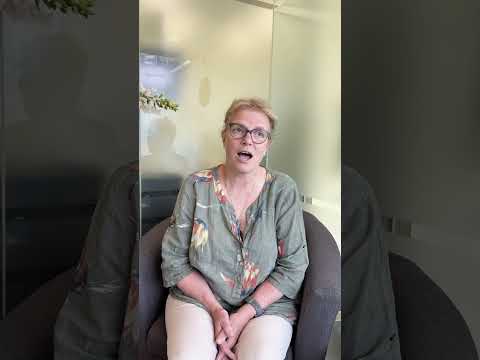
Carol is heading to Zambia with SmileStar, a dental charity providing free dental care to communities with limited access to treatment.
In this video, Carol shares a little more about where she’s going, what she’ll be doing while she’s there and why she wanted to be part of the trip.
It’s going to be a very different couple of weeks away from the practice, and we’re incredibly proud to see Carol giving her time and skills to support SmileStar’s work.
We’ll be sharing a little more from her trip when we can, but for now, we’ll let Carol tell you all about it in her own words. 💚
Safe travels, Carol. We can’t wait to hear all about it when you’re home!
#EvolveDentistry #SmileStar #Zambia #Dentistry #Portishead
🍰 Come and join us today! 💚
Our Macmillan Coffee Morning is in full swing at Evolve Dentistry, and we’d love to see you!
We’ve got plenty of delicious homemade cakes waiting for you, so pop in, say hello, grab a slice (or two!) and help us raise money for Macmillan Cancer Support.
We’ll be serving cakes right through until 5pm today, so there’s still plenty of time to come down.
📍 Evolve Dentistry, Portishead
🍰 Cakes until 5pm
💚 Everyone is welcome
Come hungry! 😋
#MacmillanCoffeeMorning #MacmillanCancerSupport #Portishead #PortisheadCommunity #EvolveDentistry
🍰☕ Today’s the day - and there’s cake! 💚
Our Macmillan Coffee Morning is happening TODAY at Evolve Dentistry and we’d love you to come and join us.
The Evolve team have been busy baking (and possibly buying… we won’t judge! 😉) and there’ll be plenty of cake and drinks available throughout the day, all in support of Macmillan Cancer Support.
And remember - you don’t need to be an Evolve patient to come along.
If you live or work in Portishead, are passing by, or just fancy an excellent excuse for cake, pop in and see us. Bring a friend, your family or your workmates too!
📍 Evolve Dentistry, Portishead
🍰 Cake and drinks throughout the day
💚 Donations for Macmillan Cancer Support
👋 Everyone welcome
No appointment needed - just pop in!
Come and help us eat an unreasonable amount of cake for a very good cause. 💚
Please share so we can get as many people through the doors as possible!
Do I have to replace a missing tooth?
If you`ve lost a tooth, do you have to replace it?
Not necessarily.
And that`s an important starting point.
What happens next depends on which tooth is missing, your mouth, how you bite, how you feel about the gap and what`s happening with the teeth around it.
Yasmin explains some of the things we consider when a tooth is missing.
The important thing isn`t assuming you need a particular treatment.
It`s understanding your options - including whether doing nothing could be a reasonable option for you.
Why have my teeth suddenly become sensitive?
That sudden zing when you drink something cold. 🥶
Sound familiar?
Sensitive teeth are common, but there isn`t just one possible cause.
Richard explains some of the reasons teeth can become sensitive and why it`s worth mentioning if you`ve noticed something new.
Sometimes a little sensitivity is exactly that.
But a change that persists is something we`d rather know about than have you quietly avoiding ice cream for the foreseeable future.