Face

 Dentistry
The words “root canal treatment” describe something most people would rather not think too deeply about.
But not knowing what will happen can make treatment seem much more intimidating than understanding it.
Root canal treatment is a sequence of carefully planned stages.
In simple terms, your clinician needs to reach the inside of the tooth, remove affected pulp tissue, clean and prepare the root canal system, fill it and make sure the tooth is appropriately restored afterwards.
The precise process varies according to the tooth and your individual circumstances.
Here is what usually happens.
Treatment starts with diagnosis.
Your dentist or endodontist needs to understand:
Assessment may involve an examination, dental X-rays and tests on the tooth.
In selected cases, additional imaging may be helpful.
Not necessarily.
CBCT produces three-dimensional information about teeth and surrounding structures.
It can be useful in some endodontic cases, particularly where additional information is required for diagnosis or treatment planning.
It isn’t something every root canal patient automatically needs.
At Evolve, CBCT scanning is available when clinically appropriate.
Root canal treatment is normally performed under local anaesthetic.
This numbs the tooth and surrounding area.
Your clinician will allow the anaesthetic to work and check that you are comfortable before beginning.
Worried about this part? Read: Does root canal treatment hurt?
Your clinician will usually place a small protective sheet called a rubber dam around the tooth.
It might look unusual if you haven’t seen one before.
Rubber dam serves several purposes, including isolating the tooth from saliva and helping protect your mouth while treatment is carried out.
Only the tooth being treated is exposed through the sheet.
Your clinician creates an opening in the tooth to reach the pulp chamber and root canals.
Teeth vary considerably.
Some have relatively straightforward canal systems, while others have multiple canals, curves or more complex internal anatomy.
Understanding and managing this anatomy is an important part of endodontic treatment.
Affected pulp tissue is removed.
Small instruments are then used to clean and shape the root canal system.
The canals are also irrigated with appropriate solutions during treatment.
The aim is to prepare the root canal system so that it can subsequently be filled.
This is a detailed stage of treatment because the structures involved can be extremely small.
A dental operating microscope provides magnification and illumination of the tooth.
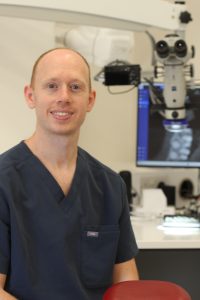
At Evolve, Specialist Endodontist Dr Alex Brett carries out his endodontic treatment using a dental operating microscope.
This helps him see and work within the small structures of the tooth.
It can be particularly useful in more complex treatment and retreatment.
The microscope is a clinical tool – it doesn’t guarantee a particular treatment outcome.
Once the root canal system has been appropriately prepared, the canals are filled and sealed.
Depending on the treatment plan, this may happen at the same appointment or a later one.
A temporary restoration may be used between appointments.
Root canal treatment deals with what is happening inside the tooth.
But the tooth also needs to function afterwards.
It therefore needs an appropriate restoration.
Depending on the tooth and how much tooth structure remains, this might involve:
The NHS notes that a crown may sometimes be needed after root canal treatment.
Your dentist or endodontist will explain what is recommended in your case.
That depends on your treatment plan.
If you’re seeing Alex specifically for specialist endodontic treatment, he will manage the endodontic aspect of your care.
The final restoration may be provided at Evolve or by your own dentist, depending on the agreed plan.
If another dentist has referred you, the intention isn’t to take over your general dental care.
We’ll communicate appropriately so that your ongoing care can continue with your usual dentist.
There isn’t one standard appointment length.
The NHS advises that root canal treatment commonly requires two or more appointments lasting around one to two hours, although appointments can sometimes be longer.
The actual time depends on factors including:
Read: How long does root canal treatment take?
Sometimes the full complexity of a tooth becomes clearer during assessment or treatment.
If something is found that materially changes the treatment options, your clinician should explain it to you.
The important principle is that treatment shouldn’t become an unexplained journey where you no longer understand what is happening.
You should have the opportunity to understand significant findings and what they mean for your options.
Some teeth require additional procedures.
Specialist endodontic care at Evolve includes:
You won’t need these simply because you’re having root canal treatment.
They are available when appropriate to the problem being treated.
Your mouth may remain numb for a while.
The tooth and surrounding tissues can sometimes feel tender afterwards.
You’ll receive appropriate aftercare instructions.
The tooth may also require further restorative treatment if this hasn’t already been completed.
Read: What happens after root canal treatment?
Follow the instructions given by your clinician. In particular, take care while your mouth remains numb and follow any advice relating to a temporary restoration.
Some treatment requires multiple stages or additional time. The number of appointments depends on the individual tooth and treatment required.
It isolates the tooth from the mouth while treatment is being carried out and is an important part of endodontic treatment.
No. The tooth roots remain. Treatment is carried out within the root canal spaces inside them.
No. The appropriate restoration depends on the tooth and your individual circumstances.
It explains what treatment means, what to expect, specialist care and the questions worth asking before you decide.
Download the guide

If you’ve been referred for specialist care – or would like to self-refer – you can speak to the Evolve team about an assessment with Dr Alex Brett, Specialist Endodontist.
Knowing what to expect can make a real difference to how you feel about dental treatment.
At Evolve Dentistry, root canal treatment is provided by Alex Brett, our Specialist Endodontist.
Alex takes time to explain the procedure, answer your questions and ensure you understand what will happen at each stage.
Using modern endodontic techniques and dental microscopes, he works carefully to treat the affected tooth while helping you feel as comfortable as possible.
From your initial assessment through to advice about caring for your tooth afterwards, Alex and the Evolve team are here to support you.
Speak to our team about an endodontic assessment
For further independent information, see the NHS information about root canal treatment.



Having amalgam fillings doesn’t automatically mean they need to be replaced.
If a filling is sound and the tooth is healthy, there may be no dental reason to remove it.
Some adults choose to explore replacement because a filling is failing, because of its appearance, or because they have made a personal decision that they would prefer an alternative material.
What matters is having the information you need to make an informed choice.
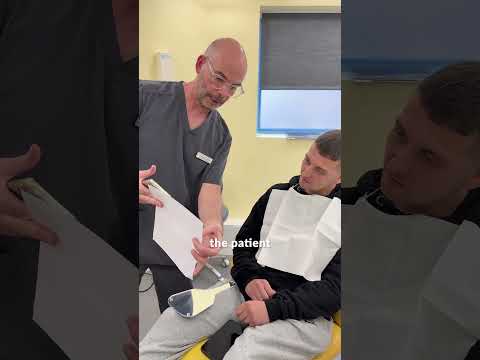
In this video, we talk through some of the reasons an amalgam filling might be replaced, and when leaving it alone may be the appropriate option.
#AmalgamFillings #SMARTAmalgamRemoval #DentalCare #EvolveDentistry

If you’re considering replacing an amalgam filling, you may have come across the term SMART.
SMART stands for Safe Mercury Amalgam Removal Technique. It is a protocol designed to reduce exposure to mercury vapour and particles while an amalgam filling is being removed.
At Evolve, SMART amalgam removal is available for adults who have made an informed decision to replace their amalgam fillings.
Importantly, we don’t suggest that everyone should have their amalgam fillings removed, and we don’t make claims that removing them will improve your general health.
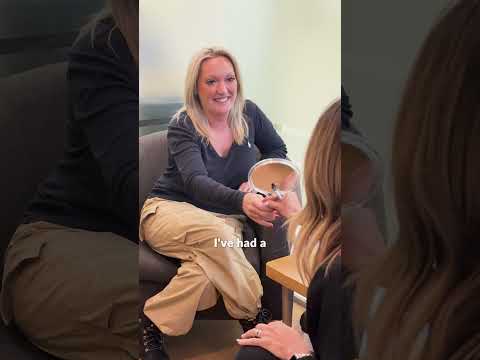
In this video, we explain what the SMART approach involves and why someone might choose it.
#SMARTAmalgamRemoval #AmalgamFillings #DentalCare #EvolveDentistry
Why do dentists recommend fluoride toothpaste?
Because fluoride helps strengthen tooth enamel and makes teeth more resistant to decay.
It’s one of those small, everyday habits that can make a meaningful difference to your oral health over time.
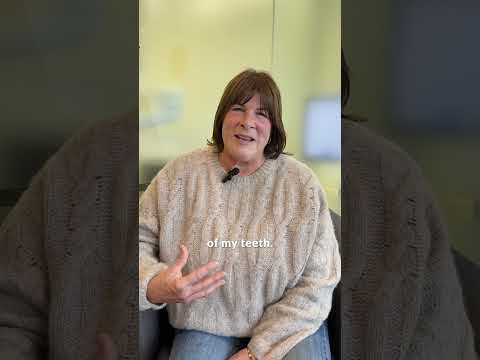
In this short video, Yasmin explains why fluoride is recommended and why the toothpaste you use matters.
Simple advice, but an important part of looking after your teeth between appointments.
#OralHealth #Fluoride #DentalCare #PreventiveDentistry #EvolveDentistry
💚 A little perspective from Zambia…
Carol has shared some more photos from her volunteering trip, along with a statistic that really puts things into perspective.
🇿🇲 In Zambia, there are just 450 dentists for a population of 21 million people.
That’s approximately one dentist for every 47,000 people.
For many communities, accessing dental care is incredibly difficult, and treatment that we might take for granted here in the UK simply isn’t readily available.
It’s a powerful reminder of how important access to dental care is, and why trips like this can make such a difference.
We’re incredibly proud of Carol for giving her time and skills to help people who might otherwise struggle to receive the care they need.
And we’re loving seeing the photos and hearing about her experiences along the way! 💚
#EvolveDentistry #DentalVolunteering #Zambia #MakingADifference #Portishead
Evolve didn’t begin with a treatment list. It began with an idea about how going to the dentist could feel.
Carol wanted to create a practice where excellent dentistry and genuinely thoughtful patient care sat side by side. Somewhere people felt listened to, comfortable asking questions and involved in decisions about their care.
In this short video, Carol shares why she started Evolve and what she wanted to create.
Nearly 18 years later, that original idea still shapes the way we look after people every day.
#EvolveDentistry #OurStory #Portishead PatientCare
💚 WE’RE HIRING! Join our award-winning team! 💚
Patient Care Advisor | Evolve Dentistry, Portishead
We’re not just looking for someone to answer the phone and book appointments.
We’re looking for someone who LOVES people, takes pride in making others feel welcome and believes that exceptional customer service is all about the little things. ✨
At Evolve Dentistry, our Patient Care Advisors are at the heart of everything we do. From the first friendly hello to helping patients feel comfortable and cared for, you’ll play a huge part in creating the experience we’re so proud of.
And the best bit? You don’t need dental experience!
If you’ve worked in hospitality, customer service, reception or another people-focused role, we’d love to hear from you.
💚 What we’re offering:
✨ £14.50–£17.50 per hour, depending on experience
✨ A supportive, award-winning team
✨ A beautiful, modern working environment
✨ Training and development opportunities
✨ Staff dental discounts
✨ Team socials and celebrations
✨ A workplace where you’re genuinely valued
📅 Working hours:
Tuesday afternoons, Wednesdays, Thursdays and one Saturday per month.
We’re looking for someone who’s warm, organised, confident, positive and passionate about making a difference to people’s day.
Sound like you? We’d love to meet you!
📩 Email hello@evolve-dentistry.co.uk to request an application pack.
⏰ Applications close Friday 30 October 2026.
💚 Know someone who’d be perfect for our team? Tag them below or share this post with them!
#EvolveDentistry #WereHiring #PortisheadJobs #NorthSomersetJobs #DentalCareers #PatientCare #JoinOurTeam

 BannerText_Seraphinite Accelerator