Face

 Dentistry
Being told you need root canal treatment can sound worrying, particularly if you are already experiencing toothache or have heard difficult stories about the treatment.
Understanding why treatment has been recommended and what will actually happen can make the situation feel much more manageable.
Root canal treatment – also known as endodontic treatment – is used when the soft tissue inside a tooth, known as the pulp, has become inflamed, infected or damaged.
The aim is to treat the problem inside the tooth and, where possible, allow you to keep your natural tooth rather than having it removed.
At Evolve Dentistry in Portishead, root canal treatment is available as part of our general dental care. We also offer specialist endodontic assessment and treatment with Dr Alex Brett, Specialist Endodontist, GDC no. 244328, for patients who require or would like specialist care.
You don’t have to be an existing Evolve patient and you don’t need a referral from your dentist. You can contact us directly for a specialist endodontic assessment.
Start by understanding why root canal treatment may have been recommended and what may be happening inside your tooth.
Read: Why do I need root canal treatment?
You’re certainly not the only person to worry about this. Find out about local anaesthetic, what you may feel during treatment and what to expect afterwards.
Read: Does root canal treatment hurt?
We’ll take you through root canal treatment step by step, from assessment and local anaesthetic to cleaning, filling and restoring the tooth.
Read: What happens during root canal treatment?
Find out what an endodontist is, why specialist assessment may be recommended and what happens when you come to Evolve.
Read: What is an endodontist and why might I need to see one?
There isn’t one answer that’s right for everybody. Understand some of the factors your dentist or endodontist will consider with you.
Read: Root canal treatment or extraction – how do I decide?
A previously root-filled tooth can sometimes develop symptoms or signs of a problem. This doesn’t automatically mean the tooth has to be removed.
Read: My root canal hasn’t worked – can my tooth still be treated?
Retreatment involves treating the root canal system again. Find out why this can sometimes be recommended and what is involved.
Read: What is root canal retreatment?
Inside every tooth is a space containing soft tissue called the dental pulp.
The pulp contains nerves and blood vessels and plays an important role while the tooth is developing.
It can become inflamed or infected for several reasons, including deep tooth decay, cracks or damage to a tooth and trauma.
Root canal treatment involves accessing the inside of the tooth, removing inflamed or infected pulp tissue, cleaning and shaping the root canal system and then filling and sealing it.
The NHS describes root canal treatment as treatment to remove infection from inside a tooth before it is cleaned and filled.
The purpose isn’t to remove the tooth.
Where the tooth is suitable for treatment, the aim is to deal with the problem inside it so that the natural tooth can remain in your mouth.
Read more: Why do I need root canal treatment?
You cannot reliably diagnose the need for root canal treatment yourself.
Some people experience obvious symptoms. Others have relatively few symptoms and a problem is discovered during a dental examination or on an X-ray.
Possible symptoms can include:
These symptoms don’t necessarily mean you need root canal treatment. Other dental problems can cause similar symptoms.
The important step is finding out why you are experiencing them.
Your dentist or endodontist will assess the tooth, your symptoms and relevant dental history and may take X-rays or carry out other tests before discussing a diagnosis and treatment options with you.
This is probably the question we hear most often.
Root canal treatment is normally carried out using local anaesthetic to numb the tooth and surrounding area.
The NHS explains that patients are normally awake during treatment but the local anaesthetic is used so that they do not feel pain during the procedure.
Experiences vary, and some teeth are more difficult to numb than others. Your clinician will check that you are comfortable before proceeding.
It is also possible for the tooth and surrounding area to feel tender or sore after treatment.
If anxiety about treatment is one of the things stopping you from seeking help, please tell us. It is useful information for your dental team to know.
Every tooth and every case is different, but treatment generally follows several stages.
Your clinician first needs to understand what is happening and whether root canal treatment is an appropriate option.
This may include an examination, X-rays and tests on the tooth.
Local anaesthetic is normally used to numb the area.
A small protective sheet called a rubber dam is usually placed around the tooth.
This helps isolate it from saliva and protects your mouth during treatment.
An opening is made in the tooth so that the clinician can reach the pulp and root canals.
Inflamed or infected tissue is removed and the root canal system is carefully cleaned, disinfected and shaped.
Once the canals are ready, they are filled and sealed.
The tooth will also need an appropriate restoration.
Depending on the tooth and how much healthy structure remains, this might involve a filling, onlay or crown.
Treatment may take more than one appointment.
The NHS says root canal treatment commonly takes two or more appointments, often lasting one to two hours, although treatment can sometimes take longer.
Your clinician will explain what is anticipated for your particular tooth.
See the complete journey: What happens during root canal treatment?
An endodontist is a dentist who has undertaken further recognised specialist training in endodontics – the area of dentistry concerned with the dental pulp and tissues surrounding the roots of teeth.
“Specialist” is a protected professional description in UK dentistry. A dentist can describe themselves as a specialist in a particular discipline only if they are included on the relevant GDC Specialist List.
At Evolve, specialist endodontic care is provided by:
Specialist Endodontist
GDC no. 244328
Alex accepts both referrals from other dentists and patients who choose to self-refer.
You do not need to change dentist to see Alex.
If you normally attend another dental practice, you can come to Evolve for specialist endodontic assessment and treatment and continue your ongoing dental care with your usual dentist.
Find out more: What is an endodontist and why might I need to see one?
Many root canal treatments are carried out successfully in general dental practice.
Sometimes a tooth or situation is more complex and your dentist may recommend assessment or treatment by a Specialist Endodontist.
At Evolve, Alex can assess and provide:
Treatment of the root canal system where the pulp has become inflamed, infected or damaged.
Further treatment of a tooth that has previously undergone root canal treatment but requires reassessment or treatment.
In some retreatment cases, existing materials or components may need to be removed before the root canal system can be accessed.
Assessment and management of an unwanted opening between the root canal system and surrounding tissues.
Assessment and treatment planning for certain types of resorption, where tooth structure is being lost through a biological process.
A surgical endodontic procedure that may be considered in selected cases where conventional treatment or retreatment is not appropriate or has not resolved the problem.
The fact that these treatments are available does not mean they will be appropriate for every tooth.
Alex’s first job is to establish what is happening and discuss the reasonable options with you.
Having symptoms from a tooth that has previously undergone root canal treatment can be frustrating.
It also doesn’t automatically mean the tooth needs to be removed.
Problems can occur for different reasons. The British Endodontic Society explains that these may include complex canal anatomy, problems that could not be addressed during the original treatment, or later problems with the tooth or restoration.
The next step is therefore assessment rather than assumption.
Depending on the findings, possible options might include:
Not every option is suitable for every tooth.
Read: My root canal hasn’t worked – can my tooth still be treated?
Read: What is root canal retreatment?
If a tooth is significantly damaged or infected, you may sometimes face a decision between trying to retain it and having it removed.
That decision isn’t simply:
“Which treatment is better?”
It depends on the individual tooth.
Questions include:
Where root canal treatment is appropriate, one advantage is the possibility of retaining your natural tooth.
But there are situations where attempting root canal treatment may not be appropriate or where extraction is a reasonable alternative.
Our role is to help you understand that decision rather than persuade you towards one option.
Read: Root canal treatment or extraction – how do I decide?x
The structures inside teeth can be extremely small.
A dental operating microscope provides magnification and illumination, helping Alex see the tooth and root canal system while carrying out treatment.
This can be particularly useful when managing complex anatomy and during procedures such as retreatment, post or file removal and perforation repair.
The microscope doesn’t guarantee the outcome of treatment.
It is a clinical tool that helps Alex examine and work within a very small area.
Most people are familiar with ordinary dental X-rays, which produce a two-dimensional image.
A CBCT scan can provide a three-dimensional view of teeth and surrounding structures.
It is not automatically required for every root canal treatment.
Alex may recommend CBCT imaging where the additional information could help with assessment, diagnosis or treatment planning.
If a scan is recommended, we’ll explain why before it is carried out.
There isn’t a single appointment length that applies to everyone.
It depends on factors including:
The NHS advises that root canal treatment commonly requires two or more appointments and appointments may last one to two hours or sometimes longer.
Your treatment may differ from this.
Alex will explain what is anticipated after assessing your tooth.
Read: How long does root canal treatment take?
Once the root canal treatment itself has been completed, the tooth needs to be appropriately restored and looked after.
Depending on your situation, this may involve a filling, onlay or crown.
If you have been referred by your own dentist, we’ll make sure there is a clear plan for what happens next so that your ongoing care can continue with them.
Some tenderness after treatment can occur.
Your clinician will give you specific aftercare advice and explain when you should contact Evolve if you are concerned.
Read: What happens after root canal treatment?
Yes.
You do not have to become a general dental patient at Evolve to see Alex for specialist endodontic care.
There are two routes to seeing him:
Your dentist can send us the relevant information about the tooth and the reason they would like Alex to assess it.
You can also self-refer.
If you already have a dentist, we’ll ask for relevant information and can communicate with them about your specialist treatment as appropriate and with your consent.
Once the specialist part of your care is complete, you can continue your routine dental care with your usual practice.
GDC no. 244328
Alex is a UK-trained Specialist Endodontist and accepts patients for all aspects of endodontic care, including root canal treatment and retreatment, file and post removal, perforation repair, apical microsurgery and management of resorption.
He completed a four-year Clinical Masters degree in Endodontology with distinction, treating patients with complex root canal needs referred to Guy’s Dental Hospital.
Alex has worked in dental practices in London and the South West and has been involved in teaching endodontics to undergraduate dentists at King’s College London Dental School.
He is also a published author in the Journal of Endodontics.
Alex carries out his endodontic treatment using a dental operating microscope.
Yes. Endodontics is the area of dentistry concerned with the dental pulp and tissues surrounding the roots of teeth. Root canal treatment is one form of endodontic treatment.
During root canal treatment, pulp tissue is removed from inside the tooth. The tooth can nevertheless remain in your mouth and continue to function once appropriately treated and restored.
Possibly.
The restoration required depends on the tooth, how much tooth structure remains and other clinical factors. The NHS notes that a crown may be required in some cases.
Your dentist or endodontist will discuss the appropriate restoration with you.
Root canal treatment does not come with a guaranteed outcome.
A previously treated tooth can sometimes develop persistent or new problems.
If that happens, it needs to be assessed. Depending on the circumstances, further options may include retreatment, apical microsurgery or extraction.
Yes.
Alex accepts self-referrals as well as referrals from dentists.
No.
You can see Alex solely for specialist endodontic care and continue your routine care with your existing dentist.
No.
A CBCT scan is used when clinically appropriate. Alex will recommend one only if he considers the additional three-dimensional information useful for your assessment or treatment planning.
No.
Many root canal treatments can be provided in general dental practice.
Specialist assessment may be appropriate when a case is more complex, where previous treatment requires reassessment, where your dentist recommends referral or where you choose to seek a specialist opinion.
Being told you may need root canal treatment can leave you with lots of questions.
Our patient guide explains why treatment may be needed, what happens, what an endodontist does, what to expect afterwards and some of the questions you may want to ask before deciding what to do.
Your guide to root canal treatment
What it means, what to expect and understanding your options

If your dentist has recommended root canal treatment, you’ve been advised to see an endodontist or you’re concerned about a tooth that has previously been root treated, we’re happy to help you understand the next step.
You can be referred by your dentist or contact Evolve directly.
Speak to the Evolve team about an endodontic assessment
Not sure whether you need specialist care? That’s fine too. Tell us what has happened so far and we’ll help you understand the appropriate next step.
Call 01275 842 550
For information about our other treatments and prices, view our dental fees.
You can also read the NHS information about root canal treatment or Evolve Dentistry’s CQC report.
back to treatments 💚 Looking after yourself goes beyond your smile.
At Evolve Dentistry, we believe that feeling good is about caring for your whole body and mind. That’s why we love connecting with other local businesses in Portishead that share our passion for health and wellbeing.
This month, we’re delighted to feature Jessica from @flexe_pilates , a local Reformer Pilates studio, on our website.
Have you ever thought about trying Pilates but felt a little nervous about taking that first step?
Jessica has written a lovely beginner-friendly guide that answers some of the questions you might have, including:
✨ What actually happens in a Reformer Pilates class?
✨ Do you need to be fit or flexible to start?
✨ What should you expect from your first session?
✨ How often should beginners practise Pilates?
Whether you’re looking to build strength, improve mobility or simply find a little time for yourself, it’s a great introduction.
We’re proud to support our local Portishead community and share advice from people who are passionate about helping others feel their best.
👉 Read Jessica’s full article on our website link in bio.
#EvolveDentistry #Portishead #FlexePilates #PortisheadCommunity #WholeBodyWellbeing #ReformerPilates

What do we hope you remember after visiting Evolve?
Not just whether your teeth feel cleaner or whether your appointment ran on time.
We hope you remember being listened to. Having the chance to ask questions. Feeling comfortable enough to say if something worries you. And knowing that decisions about your care were made with you, not simply for you.
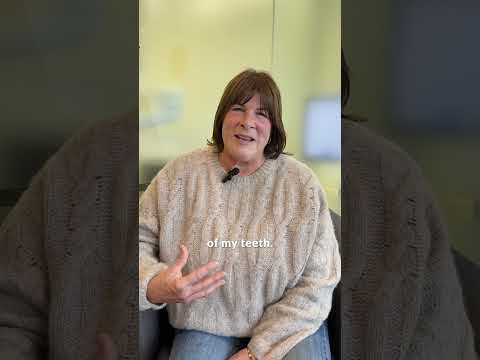
In this short video, Carol shares what she hopes people take away from their time with us.
It’s a lovely reminder that the way you feel during an appointment matters every bit as much as the dentistry itself. 💚
We have a limited number of appointments available at our Wrinkle Clinic on Thursday 5 November.
If you’ve been considering anti-wrinkle treatments, whether it’s your first time or you’re looking to maintain your results, our clinic offers a professional, personalised approach to helping you feel confident in your skin.
Every treatment begins with a consultation to understand your concerns and discuss the options available to you.
📅 Thursday 5 November
📍 Evolve Dentistry, Portishead
📞 Get in touch with our friendly team to book your appointment.
s. ✨
🎉 10 years of Hannah at Evolve! 💚
A whole decade of being part of the Evolve family!
This month, we’re celebrating a very special milestone as Hannah marks 10 years with us.
Ten years of looking after patients, working alongside the team and being part of everything that makes Evolve what it is today.
We’re so grateful for the care, commitment and personality Hannah brings to the practice.
Thank you for everything you do, Hannah. Here’s to 10 wonderful years! 🥂
Please join us in congratulating Hannah in the comments! 💚
Have you ever wondered whether orthodontic treatment might be worth exploring?
It isn’t only about having perfectly straight teeth.
You might decide to ask about adult braces because:
• you feel self-conscious about crowded or overlapping teeth
• gaps bother you
• your bite doesn’t feel quite right
• teeth have moved since you had braces when you were younger
• cleaning between crowded teeth is difficult
• you avoid smiling in photographs
• you simply want to understand what could be possible
None of these automatically means you need braces.
A consultation is simply a chance to understand your smile, discuss what you’d like to change and find out whether orthodontic treatment is appropriate for you.
#AdultBraces #Orthodontics #SmileConfidence #EvolveDentistry
Do you clench or grind your teeth without realising?
For some people it happens during sleep. Others notice themselves clenching when they’re concentrating or under pressure.
Over time, tooth grinding can contribute to worn or chipped teeth, jaw discomfort, headaches or sensitivity.
Richard explains some of the common reasons people grind their teeth and why it’s worth mentioning if you think you might be doing it.
There isn’t one solution that’s right for everybody, so the first step is understanding what’s happening in your individual case.
#Bruxism #ToothGrinding #DentalHealth #EvolveDentistry

 BannerText_Seraphinite Accelerator